AZAD-HYE (30 October 2004): In a recent interview with Armenpress (13 July 2004) Arthur Zakarian, Head of the Department of Tourism in the Armenian Ministry of Trade and Economic Development declared that the geography of the foreign tourists visiting Armenia is expanding and visitors from EU countries are set, for the first time, to exceed those coming form ex-Soviet Republics. According to him, this is an indication that Armenia is becoming an attractive tourist destination for new markets. "Armenia's tourists industry has the potential of becoming one of the largest sectors in the national economy," he added.
In a press release dated 26th October 2004, the Armenian Tourism Development Agency ATDA, announced that it will be presenting Armenia in London's World Travel Market (8-11 November 2005), the most famous tourism and travel fair worldwide. During this fourth consecutive attendance, Armenia will be introduced as a "four season new destination".
Although international travel exhibitions such as London's World Travel Market (WTM), Berlin's Tourism Exhibition (ITB) and Moscow's International Travel & Tourism Exhibition (MITT) are all important venues to meet potential buyers of the Armenian tourism product, it is time to open up to some regional tourism exhibitions, especially to the Arabian Travel Market in Dubai, the Middle East's premier travel and tourism exhibition, whose 12th edition will be held at the Dubai World Trade Centre from May 3-6, 2005. To date, exhibitors from 16 countries have reserved space for the show. Four weeks since the official launch of its sales campaign this month 42 % of space for Arabian Travel Market 2005 has been reserved.
Arabian Travel Market 2005 has received huge pavilion allocations from Dubai projects ("The Palm", "Dubailand", etc), Abu Dhabi Tourism Authority and countries such as Australia, Singapore, India, Thailand and Turkey, etc. One of the officers stated: 'We are optimistic about another record-breaking show next year, particularly in view of the fact that 93% of all exhibitors completed rebooking forms onsite at the 2004 event'.
Arabian Travel Market 2005 is held under the auspices of the Department of Tourism and Commerce Marketing, Government of Dubai. Armenia can benefit a lot by attracting both UAE locals and expatriates (foreign workers residing in the country). Hundreds of thousands affluent citizens and residents of this country travel to the Far Asia, Australia, Europe and many other places in the world for their vacations, especially due to the fact that the summer weather in the UAE is very harsh, therefore it forces the population out to resorts and tourism destinations in countries with mild climatic conditions.
Many countries and companies are benefiting from the tourism cake of the UAE and the rest of the Gulf countries, why should not a neighboring, beautiful, affordable and open-minded Armenia reap portion of the well deserved income.

Middle East Armenian Portal
30 October 2004

29 October 2004
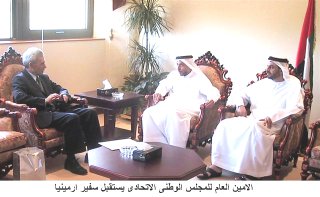

Artur Baghdassaryan tours Gulf Countries
AZAD-HYE (29 October 2004): The Chairman of the National Assembly of the Republic of Armenia, Artur Baghdassaryan, will be touring three Arabian Gulf countries during the second half of November 2004. His first stopover will be in Kuwait (21-23 November), followed by a similar visits to Bahrain (23-25 November) and UAE (26-28 November). In all these countries he will be meeting with governmental officials including Heads of the Parliaments.
It should be noted that in April 2002 a Kuwaiti Parliamentarian Delegation visited Armenia led by Member of Parliament Ahmed Nasser Al Sherian. The Delegation stressed the importance of developing Armenian-Kuwaiti relations and explored means of enhancing economic cooperation. The two sides discussed regional issues in the Middle East and the Caucasus.
In Bahrain, an initiative for establishing Armenian – Bahraini Parliamentarian Friendship Group has been discussed in April 2004 during the presentation of the credentials of the non-resident Ambassador Dr. Arshak Poladian to Bahraini officials. Chairman of the Armenian Parliament is expected to discuss during his forthcoming visit to Bahrain ways of implementing this initial appeal.
In Abu Dhabi Artur Bagdasaryan in scheduled to meet the Speaker of the Federal National Council Saeed Mohammed Al Kindi. Meetings with the members of the Armenian Community in Abu Dhabi and Sharjah are also expected.
The UAE Federal National Council has been established in 1972 (just a year after the Independence) and consists of 40 members appointed by the Rulers of the seven Emirates which make up the Federation of the UAE. Seats are distributed among the Emirates as follows: Abu Dhabi and Dubai 8 each; Sharjah and Ras Al Khaimah 6 each; Ajman, Umm Al Quwain and Fujairah 4 each.
Artur Baghdasaryan has been elected to his current position as the Chairman of the National Assembly (known also as the Speaker of the Parliament) on 12th June 2003. He has been born in Yerevan in 1968 and holds doctoral degree in Legal Sciences (Moscow 1997). He is member of the "Rule of Law" party (Orinats Yerkir) and father of two children.
It should be noted that in April 2002 a Kuwaiti Parliamentarian Delegation visited Armenia led by Member of Parliament Ahmed Nasser Al Sherian. The Delegation stressed the importance of developing Armenian-Kuwaiti relations and explored means of enhancing economic cooperation. The two sides discussed regional issues in the Middle East and the Caucasus.
In Bahrain, an initiative for establishing Armenian – Bahraini Parliamentarian Friendship Group has been discussed in April 2004 during the presentation of the credentials of the non-resident Ambassador Dr. Arshak Poladian to Bahraini officials. Chairman of the Armenian Parliament is expected to discuss during his forthcoming visit to Bahrain ways of implementing this initial appeal.
In Abu Dhabi Artur Bagdasaryan in scheduled to meet the Speaker of the Federal National Council Saeed Mohammed Al Kindi. Meetings with the members of the Armenian Community in Abu Dhabi and Sharjah are also expected.
The UAE Federal National Council has been established in 1972 (just a year after the Independence) and consists of 40 members appointed by the Rulers of the seven Emirates which make up the Federation of the UAE. Seats are distributed among the Emirates as follows: Abu Dhabi and Dubai 8 each; Sharjah and Ras Al Khaimah 6 each; Ajman, Umm Al Quwain and Fujairah 4 each.
Artur Baghdasaryan has been elected to his current position as the Chairman of the National Assembly (known also as the Speaker of the Parliament) on 12th June 2003. He has been born in Yerevan in 1968 and holds doctoral degree in Legal Sciences (Moscow 1997). He is member of the "Rule of Law" party (Orinats Yerkir) and father of two children.
26 October 2004
Ambassador Dr. Arshak Poladian in Kuwait
AZAD-HYE (26 October 2004): Dr. Arshak Poladian, Ambassador of Armenia to the United Arab Emirates first arrived here in February 2000 and operated from a small hotel not far from the present location of the Embassy premises in Abu Dhabi. Few months later, in September 2000, the Embassy was officially inaugurated with the presence of UAE, Armenian officials (including Foreign Minister Vartan Oskanian), Ambassadors of friendly countries and many Armenians.
Dr. Poladian was at that time (2000-2002) Charge d'Affaires of Armenia. In August 2002, few months after President Robert Kocharian's visit to the UAE and Qatar (April 2002) he was promoted to the rank of Ambassador Extraordinary and Plenipotentiary. President Kocharian appointed him also as non-resident Ambassador to the neighbouring State of Kuwait and the Kingdom of Bahrain.
On 26 April 2004 Ambassador Poladian presented his credentials to Sheikh Hamad Bin Isa Al Khalifa, King of Bahrain. During the official ceremony he discussed with the King the current state of Armenian-Bahraini relations and the importance of developing them. He met with the Minister of Foreign Affairs of the tiny island.
On 29th October 2004 Ambassador Dr. A. Poladian will be visiting Kuwait to present his credentials to the Emir of Kuwait as non-resident Ambassador of Armenia. The official ceremony will take place on 2nd November 2004. Ambassador Poladian will take the opportunity to discuss the scheduled visit of Artur Baghdasaryan, Chairman of the National Assembly of Armenia to Kuwait in November. He will meet also with members of the Armenian Community and the Head of the Armenian Church in the Arabian Gulf to oversee arrangements for welcoming the high-level visitor.
You are invited to read in another page correspondence about the expected visit of Artur Baghdasaryan, Chairman of the National Assembly (Parliament) of Armenia to Kuwait, Bahrain and the United Arab Emirates.
For more information please contact:
Embassy of The Republic of Armenia
PO Box 6358
Phone: (971 2) 6769222
Fax: (971 2) 6764888
Abu Dhabi
United Arab Emirates
Dr. Poladian was at that time (2000-2002) Charge d'Affaires of Armenia. In August 2002, few months after President Robert Kocharian's visit to the UAE and Qatar (April 2002) he was promoted to the rank of Ambassador Extraordinary and Plenipotentiary. President Kocharian appointed him also as non-resident Ambassador to the neighbouring State of Kuwait and the Kingdom of Bahrain.
On 26 April 2004 Ambassador Poladian presented his credentials to Sheikh Hamad Bin Isa Al Khalifa, King of Bahrain. During the official ceremony he discussed with the King the current state of Armenian-Bahraini relations and the importance of developing them. He met with the Minister of Foreign Affairs of the tiny island.
On 29th October 2004 Ambassador Dr. A. Poladian will be visiting Kuwait to present his credentials to the Emir of Kuwait as non-resident Ambassador of Armenia. The official ceremony will take place on 2nd November 2004. Ambassador Poladian will take the opportunity to discuss the scheduled visit of Artur Baghdasaryan, Chairman of the National Assembly of Armenia to Kuwait in November. He will meet also with members of the Armenian Community and the Head of the Armenian Church in the Arabian Gulf to oversee arrangements for welcoming the high-level visitor.
You are invited to read in another page correspondence about the expected visit of Artur Baghdasaryan, Chairman of the National Assembly (Parliament) of Armenia to Kuwait, Bahrain and the United Arab Emirates.
For more information please contact:
Embassy of The Republic of Armenia
PO Box 6358
Phone: (971 2) 6769222
Fax: (971 2) 6764888
Abu Dhabi
United Arab Emirates
23 October 2004
''Viken Couture'' in Abu Dhabi
AZAD-HYE (23 October 2004): Viken Sekeljian, Lebanese-Armenian fashion designer (known also as VIKAN), took part in the celebrations of the 25th anniversary of "Zahrat Al Khaleej" monthly periodical, one of the leading Arab Family publications, based in Abu Dhabi, the capital of the United Arab Emirates.
"Viken Couture" was the main feature of the second day of the celebrations (3rd October 2004, Intercontinental Hotel, Abu Dhabi). The show was marked with creative designs, tranquil colors and ornamental styles. Viken was applauded for his ability to use various colors ranges. He introduced a new wedding dress, simple in its outline and extremely elegant. 14 models paraded on the catwalk, wearing also precious stones from "Amwaj" jewelry.
Viken has been brought up in a family fond of noble arts. He studied fashion design in Lebanese reputable institutions, including tenure of one year under the supervision of famous designer Ellie Saab, who has dressed the most sophisticated women in the Middle East. Soon afterwards he participated in some local and international shows (Lebanon, Italy, etc.).
Viken stayed in Abu Dhabi for two weeks. Prior to the fashion show he appeared with the team of "Zahrat Al Khaleej" in a press conference on 20th September 2004.
More about "Viken Couture" at the: Website
The Fashion Show in Abu Dhabi was organized by: Styles Designers
"Viken Couture" was the main feature of the second day of the celebrations (3rd October 2004, Intercontinental Hotel, Abu Dhabi). The show was marked with creative designs, tranquil colors and ornamental styles. Viken was applauded for his ability to use various colors ranges. He introduced a new wedding dress, simple in its outline and extremely elegant. 14 models paraded on the catwalk, wearing also precious stones from "Amwaj" jewelry.
Viken has been brought up in a family fond of noble arts. He studied fashion design in Lebanese reputable institutions, including tenure of one year under the supervision of famous designer Ellie Saab, who has dressed the most sophisticated women in the Middle East. Soon afterwards he participated in some local and international shows (Lebanon, Italy, etc.).
Viken stayed in Abu Dhabi for two weeks. Prior to the fashion show he appeared with the team of "Zahrat Al Khaleej" in a press conference on 20th September 2004.
More about "Viken Couture" at the: Website
The Fashion Show in Abu Dhabi was organized by: Styles Designers
17 October 2004
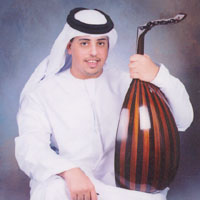
UAE duet in Armenia
AZAD-HYE (16 October 2004): The first UAE cultural delegation visited Armenia from 8-15 October 2004. It consisted of Eid Al Faraj (Head of the Cultural Department in the UAE Ministry of Culture and Information) and two artists: pianist Sultan Al Khatib and oud player Sultan Al Qubaisi.
The "two Sultans", as they are known in the UAE, had two performances: one in Yerevan on 11th October and the second in the city of Gyumri on 13th October.
On 12th October they appeared live on Anna Avanesian's morning program (Armenian Public TV), accompanied by Hovhannes Asadiran, a known figure in the Arabic division of Radio Armenia, who translated the conversation.
Eid Al Faraj said that the duet came into life when two different musical schools (western and eastern) met. This happened when oud player Sultan Al Qubaisi started taking classic music lessons from instructor Sultan Al Khatib. Exchange of views led to the idea of combining piano and oud in performing classical masterpieces.
Referring to this experience Sultan Al Khatib said that the instrument of oud has added to the classical music a touch of Arabic oriental nostalgia. He expressed his satisfaction that the duet's international debut took place in the Yerevan Music School (Conservatory). "We visited different museums and cultural sites in Yerevan. We saw the National Chamber Orchestra of Armenia and traditional dance performances. Armenian culture is very much known worldwide. It is enough to mention the name of Aram Khatchaturian. In Armenia we felt that we are in a culturally very rich country".
Sultan Al Qubaisi confessed that he did not expect all the hospitality and welcome that he witnessed from the first moment of his arrival in Armenia. "It was beyond my imagination. We visited churches and historical sites and had a very nice time". Soon after his comments he invited the TV audience to enjoy listening live to one of his oud plays.
At the end of the meeting Eid Al Faraj expressed his gratitude for the sincere attention they received from the people and the organizers alike. "It was a memorable experience to be in Armenia, a perfect start for our international project. I cannot find the right words to show my gratefulness. I would like to take this opportunity on Public TV to thank all those who were behind our visit. You must know that there are unknown soldiers who work hard to achieve such events. I specifically refer to the Armenian Cultural Association in the UAE, which is the base of such cultural exchanges. The members of that Association are sincere Ambassadors of Armenia, long before diplomatic ties were established between our two countries".
The "two Sultans", as they are known in the UAE, had two performances: one in Yerevan on 11th October and the second in the city of Gyumri on 13th October.
On 12th October they appeared live on Anna Avanesian's morning program (Armenian Public TV), accompanied by Hovhannes Asadiran, a known figure in the Arabic division of Radio Armenia, who translated the conversation.
Eid Al Faraj said that the duet came into life when two different musical schools (western and eastern) met. This happened when oud player Sultan Al Qubaisi started taking classic music lessons from instructor Sultan Al Khatib. Exchange of views led to the idea of combining piano and oud in performing classical masterpieces.
Referring to this experience Sultan Al Khatib said that the instrument of oud has added to the classical music a touch of Arabic oriental nostalgia. He expressed his satisfaction that the duet's international debut took place in the Yerevan Music School (Conservatory). "We visited different museums and cultural sites in Yerevan. We saw the National Chamber Orchestra of Armenia and traditional dance performances. Armenian culture is very much known worldwide. It is enough to mention the name of Aram Khatchaturian. In Armenia we felt that we are in a culturally very rich country".
Sultan Al Qubaisi confessed that he did not expect all the hospitality and welcome that he witnessed from the first moment of his arrival in Armenia. "It was beyond my imagination. We visited churches and historical sites and had a very nice time". Soon after his comments he invited the TV audience to enjoy listening live to one of his oud plays.
At the end of the meeting Eid Al Faraj expressed his gratitude for the sincere attention they received from the people and the organizers alike. "It was a memorable experience to be in Armenia, a perfect start for our international project. I cannot find the right words to show my gratefulness. I would like to take this opportunity on Public TV to thank all those who were behind our visit. You must know that there are unknown soldiers who work hard to achieve such events. I specifically refer to the Armenian Cultural Association in the UAE, which is the base of such cultural exchanges. The members of that Association are sincere Ambassadors of Armenia, long before diplomatic ties were established between our two countries".
11 October 2004
أهلاً بكم في الملتقى الأرمني في الشرق الأوسط
الأرمن من الشعوب التي تسكن في الشرق الأوسط منذ عصور موغلة في القدم وقد كان لهم وجود حضاري بارز لا يزال يحظى التقدير والإعتبار حتى وقتنا الحاضر.
يؤلف الأرمن جزءاً لا ينفصل عن النسيج الإجتماعي للبلدان العربية وقد انسجموا مع المجتمعات الأهلية وانخرطوا في مزاولة نشاطاتهم اليومية والقيام بالمهن المختلفة، أما أبناؤهم فيسعون وراء التحصيل العلمي في المدارس والجامعات أو يلجؤون إلى كسب قوتهم اليومي في سوق العمل.
ندعو الأرمن الذين يقرأون باللغة العربية والأصدقاء العرب أيضا ً إلى متابعة المقالات التي ستنشر تباعاً في هذا الملتقى، متمنين من الجميع ابداء الرأي والمساهمة في اغناء هذه التجربة المتميزة.
10 October 2004
Comments on the Annual Armenian Ball in Abu Dhabi
AZAD-HYE (10 October 2004): The Annual Armenian Ball took place in Sheraton - Abu Dhabi on Thursday, 30th September 2004. The event was well organized by the members of the Armenian Community of Abu Dhabi. The efficient valet parking was a nice touch considering the on going construction of the Hotel surrounding. The ballroom was nicely decorated with exotic flower arrangements, which added a touch of class to our community's formal event.
The buffet was rich and inviting, not to mention conveniently located within the ballroom. The committee members have taken the attendees feed backs of last year into consideration and upgraded the quality and quantity of the food.
Unfortunately the number of attendees for this year's Gala Dinner was about 150. The absence of participants from Dubai, Sharjah, Qatar and Oman was quite obvious. Even some of the Armenian families, who live in Abu Dhabi, and had made a potential presence in the past, were not present. None of the members of the Armenian Cultural Association of Abu Dhabi was present.
Ambassadors of Armenia and Jordan along with their spouses were present (the latter was personally invited by a non-Armenian guest). As usual, no media or press representative was invited to cover this important social event.
The event commenced at 10:30 p.m. The Master of Ceremony, Dr. Vartkes Arzoumanian, invited the Chairman of the Council of the Armenian Community of Abu Dhabi, Mr. Harout Kojakian, to the podium to address his welcoming speech. The Chairman made a brief and concise welcoming speech based on a written text.
At a very early stage of the event, the MC urged the guests to purchase the instant win raffle vouchers worth AED 250 and AED 500. This premature announcement set the guests in an uncomfortable mood, as if, they are there mainly to contribute for a cause rather than enjoy the festivity of the evening.
Following the raffle announcement, singer Mrs. Shake Baghdasarian entertained the attendees with her classic Armenian and English songs, which was the appropriate ambience for dinner. During which the selling of the raffle vouchers was at a full swing by pushing the guests to purchase vouchers repeatedly, and yet once again, to sell the lottery tickets worth AED 25. Considering the gift list, many people were hesitant to purchase the instant win raffles. Looking back at predecessors' technique, to promote raffle vouchers the gift provided should be attractive and at a higher value than the price of the raffle. In which case the guest would remain satisfied and perhaps would purchase an additional voucher and most importantly, come back the following year. When it was time for the raffle draw, it was a one-man show. The MC read the winning numbers and presented the gifts to the winners.
Around 11:45 p.m. the MC introduced the main guest singer, Mr. Hratch Gaydzagian, who was invited along with his band from Beirut to entertain the guests with his well known dynamic presence on stage. As usual technical sound problems were encountered during the introduction, and what appeared to be a very warm welcome was left unheard by the attendees. Nevertheless, Mr. Gaydzagian entered the ballroom like a lightning while singing a lively
Armenian song. He provoked the guests into dancing along with him the traditional Armenian Falk dance. This went on for about for 20 minutes. Then he switched to Arabic songs. Peoples' thirst for some modern songs was left unquenched with his medley of the 70's and 80's songs. By 1:30 a.m., he was going back and forth to Armenian and Arabic songs. Finally he started
singing a nice variety of English songs, but unfortunately by that time not many people were left to enjoy it.
Community dancing parties raise some important issues: It has become customary to say that they are the only income source for the Community. It is time to have a close look to this. Why are we almost one hundred percent dependent on the Annual Gala parties? Shouldn't we sit down and find out other sources for income. The pressure is so big on these parties that at the end the atmosphere is getting so tense and exhausting. This is true for both the organizers and participants. Let aside that such parties do not provide any particular cultural or traditional Armenian values. Socially weak families are not able to attend them. Many other who attend say that there is a sort of fake mood in the air, stemming mainly from the 2002 Community elections.
The number of donors of cash sums was limited this year compared to other years. The reason could be the economic crisis or situation in the region or lack of attention provided by the organizers to donors of previous parties, who did not receive any sort of invitation or even telephone calls during the year.
It is getting harder to attract foreigners to these parties, because no systematic public relations contacts are achieved between one party and the next. The foreigners are feeling that they are approached only on time of need, far from what etiquette requires. We need to satisfy the Armenian individuals, who encourage their foreign friends to attend the Armenian parties. Actually they undertake the social obligation to keep in touch with their foreign friends throughout the year (sometimes preserving business alliances for this sake). So if the Armenian host is not satisfied he will not enter into this kind of heavy commitment.
It is a fine tradition to publish a booklet on the occasion of these parties, where the activities of one year are recorded. The booklet includes also the advertisements of the sponsors and the list of the gifts and donations. This year only Community photos were published. There were no texts. May be because one photo stands for one thousand words. If this was true we rather have published one big photo in place of this article. Anyway the front cover of the booklet this year did not serve this policy.
The youngsters of the Community were very active and they added flavor and action to the Party. A circle of teenagers and young Armenians exist in our Community, who make their presence felt in social occasions. Unfortunately the Armenian Youth Organization of Abu Dhabi, with its aimless and monotonous meetings is far from attracting the new generation.
As we said last year, it is pity that such occasions are left unnoticed by the Media and no effort is made to invite any editor or photographer of social pages in the several dailies and periodicals that are published in the UAE. It seems that the organizers do not need free publication and do not believe that a photo in a magazine can serve as a good promotion for future parties. Two priests attended the celebration, one is the priest of Armenians of UAE and the other is a guest priest from Beirut.
Last year we published some comments on the Annual Gala. Some members of the organizing body were extremely unhappy with our views and thought that we do not appreciate their dedication and sacrifice. We cannot deny that the members are working hard, devoting many hours a day for this purpose. May be all they need is some coordination, reflection on previous faults and communication with the public during the year, such as organizing open discussions and inviting people to express their thoughts on this and other matters. We are still working with the spirit of the 20th century. Quality is getting an important factor. We cannot simply hear someone saying "we have been doing this on and on for many years" and then think that he knows what he is talking about.
The buffet was rich and inviting, not to mention conveniently located within the ballroom. The committee members have taken the attendees feed backs of last year into consideration and upgraded the quality and quantity of the food.
Unfortunately the number of attendees for this year's Gala Dinner was about 150. The absence of participants from Dubai, Sharjah, Qatar and Oman was quite obvious. Even some of the Armenian families, who live in Abu Dhabi, and had made a potential presence in the past, were not present. None of the members of the Armenian Cultural Association of Abu Dhabi was present.
Ambassadors of Armenia and Jordan along with their spouses were present (the latter was personally invited by a non-Armenian guest). As usual, no media or press representative was invited to cover this important social event.
The event commenced at 10:30 p.m. The Master of Ceremony, Dr. Vartkes Arzoumanian, invited the Chairman of the Council of the Armenian Community of Abu Dhabi, Mr. Harout Kojakian, to the podium to address his welcoming speech. The Chairman made a brief and concise welcoming speech based on a written text.
At a very early stage of the event, the MC urged the guests to purchase the instant win raffle vouchers worth AED 250 and AED 500. This premature announcement set the guests in an uncomfortable mood, as if, they are there mainly to contribute for a cause rather than enjoy the festivity of the evening.
Following the raffle announcement, singer Mrs. Shake Baghdasarian entertained the attendees with her classic Armenian and English songs, which was the appropriate ambience for dinner. During which the selling of the raffle vouchers was at a full swing by pushing the guests to purchase vouchers repeatedly, and yet once again, to sell the lottery tickets worth AED 25. Considering the gift list, many people were hesitant to purchase the instant win raffles. Looking back at predecessors' technique, to promote raffle vouchers the gift provided should be attractive and at a higher value than the price of the raffle. In which case the guest would remain satisfied and perhaps would purchase an additional voucher and most importantly, come back the following year. When it was time for the raffle draw, it was a one-man show. The MC read the winning numbers and presented the gifts to the winners.
Around 11:45 p.m. the MC introduced the main guest singer, Mr. Hratch Gaydzagian, who was invited along with his band from Beirut to entertain the guests with his well known dynamic presence on stage. As usual technical sound problems were encountered during the introduction, and what appeared to be a very warm welcome was left unheard by the attendees. Nevertheless, Mr. Gaydzagian entered the ballroom like a lightning while singing a lively
Armenian song. He provoked the guests into dancing along with him the traditional Armenian Falk dance. This went on for about for 20 minutes. Then he switched to Arabic songs. Peoples' thirst for some modern songs was left unquenched with his medley of the 70's and 80's songs. By 1:30 a.m., he was going back and forth to Armenian and Arabic songs. Finally he started
singing a nice variety of English songs, but unfortunately by that time not many people were left to enjoy it.
Community dancing parties raise some important issues: It has become customary to say that they are the only income source for the Community. It is time to have a close look to this. Why are we almost one hundred percent dependent on the Annual Gala parties? Shouldn't we sit down and find out other sources for income. The pressure is so big on these parties that at the end the atmosphere is getting so tense and exhausting. This is true for both the organizers and participants. Let aside that such parties do not provide any particular cultural or traditional Armenian values. Socially weak families are not able to attend them. Many other who attend say that there is a sort of fake mood in the air, stemming mainly from the 2002 Community elections.
The number of donors of cash sums was limited this year compared to other years. The reason could be the economic crisis or situation in the region or lack of attention provided by the organizers to donors of previous parties, who did not receive any sort of invitation or even telephone calls during the year.
It is getting harder to attract foreigners to these parties, because no systematic public relations contacts are achieved between one party and the next. The foreigners are feeling that they are approached only on time of need, far from what etiquette requires. We need to satisfy the Armenian individuals, who encourage their foreign friends to attend the Armenian parties. Actually they undertake the social obligation to keep in touch with their foreign friends throughout the year (sometimes preserving business alliances for this sake). So if the Armenian host is not satisfied he will not enter into this kind of heavy commitment.
It is a fine tradition to publish a booklet on the occasion of these parties, where the activities of one year are recorded. The booklet includes also the advertisements of the sponsors and the list of the gifts and donations. This year only Community photos were published. There were no texts. May be because one photo stands for one thousand words. If this was true we rather have published one big photo in place of this article. Anyway the front cover of the booklet this year did not serve this policy.
The youngsters of the Community were very active and they added flavor and action to the Party. A circle of teenagers and young Armenians exist in our Community, who make their presence felt in social occasions. Unfortunately the Armenian Youth Organization of Abu Dhabi, with its aimless and monotonous meetings is far from attracting the new generation.
As we said last year, it is pity that such occasions are left unnoticed by the Media and no effort is made to invite any editor or photographer of social pages in the several dailies and periodicals that are published in the UAE. It seems that the organizers do not need free publication and do not believe that a photo in a magazine can serve as a good promotion for future parties. Two priests attended the celebration, one is the priest of Armenians of UAE and the other is a guest priest from Beirut.
Last year we published some comments on the Annual Gala. Some members of the organizing body were extremely unhappy with our views and thought that we do not appreciate their dedication and sacrifice. We cannot deny that the members are working hard, devoting many hours a day for this purpose. May be all they need is some coordination, reflection on previous faults and communication with the public during the year, such as organizing open discussions and inviting people to express their thoughts on this and other matters. We are still working with the spirit of the 20th century. Quality is getting an important factor. We cannot simply hear someone saying "we have been doing this on and on for many years" and then think that he knows what he is talking about.
09 October 2004
The two Sultans in Armenia
AZAD-HYE (8 October 2004): Today's Dubai - Yerevan biweekly flight of the Armenian Airlines will take on board the first Emirates Cultural Delegation on a visit to Armenia. The Delegation is headed by Eid Al Faraj, senior administrator at the Cultural Foundation (Abu Dhabi) and two artists: pianist Sultan Al Khatib and oud player Sultan Salem Khalifa Al Qubaisi (nicknamed as "the two Sultans"), who will perform on the stages of the Armenian capital from 9-15th October 2004.
The two performers have their own international musical project, demonstrated for the first time in the Cultural Foundation a year ago, amid public appraisal. They played classical masterpieces using a unique combination of piano (western instrument) and oud (eastern instrument). Armenia is the next stop on their international tour.
It is worth mentioning that oud player Sultan Al Qubaisi was taught classical music by his co-performer Sultan Al Khatib, achieving thus the status of the only player in the Arab World who combines knowledge of two instruments (piano and oud), from two completely different musical
heritages.
The trip is organized though the efforts of the Armenian Cultural Association of Abu Dhabi and in cooperation with the Embassy of Armenia and the UAE Ministry of Information and Culture.
Review of the cultural relations between Armenia and UAE:
On 20th April 2002 President Robert Kocharian arrived in the UAE for a three day state visit, the first of its kind by an Armenian President to a Gulf Country. During this visit he held talks with the President of the UAE Sheikh Zayed bin Sultan Al Nahyan. UAE and Armenia signed seven agreements, covering various areas including culture and education.
First Armenian Cultural Week:
On 24th March 2001, under the patronage of the Minister of Information and Culture Sheikh Abdulla Bin Zayed Al Nahyan the first Armenian Cultural Week was inaugurated in Abu Dhabi, carrying the title: "Colors of Armenia".
Second Armenian Cultural Week:
The second Armenian Cultural Week took place from 14-19 December 2002 in the Cultural Foundation in Abu Dhabi. The event highlighted Armenian art, handicrafts, and films and was attended by the then Minister of Culture, Youth Affairs and Sports of Armenia Roland Sharoyan. During the week, an exhibition of ancient Armenian carpets, bronze sculptures, paintings, classical music and films were showcased. The exhibits were from the Armenian State Museum of Folk Arts.
The two performers have their own international musical project, demonstrated for the first time in the Cultural Foundation a year ago, amid public appraisal. They played classical masterpieces using a unique combination of piano (western instrument) and oud (eastern instrument). Armenia is the next stop on their international tour.
It is worth mentioning that oud player Sultan Al Qubaisi was taught classical music by his co-performer Sultan Al Khatib, achieving thus the status of the only player in the Arab World who combines knowledge of two instruments (piano and oud), from two completely different musical
heritages.
The trip is organized though the efforts of the Armenian Cultural Association of Abu Dhabi and in cooperation with the Embassy of Armenia and the UAE Ministry of Information and Culture.
Review of the cultural relations between Armenia and UAE:
On 20th April 2002 President Robert Kocharian arrived in the UAE for a three day state visit, the first of its kind by an Armenian President to a Gulf Country. During this visit he held talks with the President of the UAE Sheikh Zayed bin Sultan Al Nahyan. UAE and Armenia signed seven agreements, covering various areas including culture and education.
First Armenian Cultural Week:
On 24th March 2001, under the patronage of the Minister of Information and Culture Sheikh Abdulla Bin Zayed Al Nahyan the first Armenian Cultural Week was inaugurated in Abu Dhabi, carrying the title: "Colors of Armenia".
Second Armenian Cultural Week:
The second Armenian Cultural Week took place from 14-19 December 2002 in the Cultural Foundation in Abu Dhabi. The event highlighted Armenian art, handicrafts, and films and was attended by the then Minister of Culture, Youth Affairs and Sports of Armenia Roland Sharoyan. During the week, an exhibition of ancient Armenian carpets, bronze sculptures, paintings, classical music and films were showcased. The exhibits were from the Armenian State Museum of Folk Arts.
08 October 2004
Turkey: To be European or not to be
AZAD-HYE (8 October 2004): Lebanese "Daily Star" argues in its 8th October 2004 editorial that "A European Turkey stands to be a guiding light for the Muslim world". It concludes that "the best way the Arab and Islamic worlds can help - and benefit themselves - is to participate in Turkey's economic, social and political transformation".
It is no secret that Arab politicians are following carefully the process of Turkey's membership to the European Union. After all Turkey's admission will bring the European border just north of Syria and Iraq and for the first time Asia Minor will be no more an Asian territory.
The European Commission recommended on 6th October 2004 that EU leaders set a date to launch membership talks with Turkey when they meet on the 17th December 2004 to assess Turkey's situation. The report, however, came with a number of heavy conditions and a warning that a likely start of negotiations would not guarantee membership.
A Turkish daily claims that "opponents of Turkey in the European Council tried to append conditions to the report on Turkey just prior to the report's release. Suggested conditions ranged from acceptance of the [so-called] Armenian genocide to a privileged partnership; however, none of the conditions were added" ("Zaman", 7/10/2004).
In the view of many Westerners, Turkey is regarded as a model for Arab countries and a stabilizing factor in a very disturbing neighborhood. A Dutch Euro-parliamentarian Joost Lagendijk says: "I think there is a lot of explaining that needs to be done by those who are in favour of Turkish membership like myself to explain that Islam in Turkey is completely
different from Islam in Iran or in Saudi Arabia and that getting Turkey in will prove that being a Muslim and being a democrat can be combined, and I think that would send out an important message to the rest of the world." (Radio Netherlands, 7/10/2004).
Francis Wurtz of the European United Left is also supportive of Turkey's European potential, saying that "Turkey's EU accession could serve as a bridge between the West and the Middle East, contributing to establishing peace in a region plagued by war and chaos". He also said that using Turkey as a scapegoat would be a mistake, but acknowledged that there are a series
of issues Turkey must resolve. These include certain clauses of the new penal code, which according to Wurtz, pose a threat to freedom of expression; the Turkish occupation forces in Cyprus and the Turkish authorities' refusal to recognize the Armenian genocide (Athens News Agency, 7/10/2004).
Turkey's obsession with the European dream dates back to the Ottoman times, when Turkish forces conquered the Balkans and reached to Vienna, but could not knock down the walls of the fortified city. In modern times, Kemal Ataturk promoted his image in the Western World as a reformist and a secular leader in a predominantly Islamic country.
For many decades Turks believed their country is a democratic one. Ahmet Acet, the Turkish Government's Deputy Undersecretary for European Affairs says that "Five years ago, we thought we were a democracy. After going through this process, we realized we were less democratic than we thought we were". ("The Christian Science Monitor", 7/10/2004).
The same could apply to the Turkish conviction about the Armenian Genocide. Five years from now we may guess that Turks will be more willing to accept the fact of the Genocide, if they are sincere about their orientation as a European nation. Unfortunately the new Penal Code that was voted by the Turkish Parliament and hailed by many Europeans as a step towards democracy still considers a criminal offence to mention the Armenian Genocide or to demand withdrawal of occupying Turkish forces from Cyprus. It may sound strange, but in the euphoria of taming Turkey, Europeans are not at the time being in a position to examine closely the Armenian and Cypriots perspective of Turkey politics.
But the Turks are feeling that the price of democracy and European identity could be very high in terms of the collapse of some historical myths. Turkish Press.com quotes Sinan Aygun, Chairman of the Ankara Chamber of Commerce protesting "they [the Europeans] say there are many missions to accomplish. What will happen about Cyprus, Aegean, southeast, minority and human rights issues? Will they ask us to accept so-called Armenian genocide? ... We cannot see them clearly''.
It is no secret that Arab politicians are following carefully the process of Turkey's membership to the European Union. After all Turkey's admission will bring the European border just north of Syria and Iraq and for the first time Asia Minor will be no more an Asian territory.
The European Commission recommended on 6th October 2004 that EU leaders set a date to launch membership talks with Turkey when they meet on the 17th December 2004 to assess Turkey's situation. The report, however, came with a number of heavy conditions and a warning that a likely start of negotiations would not guarantee membership.
A Turkish daily claims that "opponents of Turkey in the European Council tried to append conditions to the report on Turkey just prior to the report's release. Suggested conditions ranged from acceptance of the [so-called] Armenian genocide to a privileged partnership; however, none of the conditions were added" ("Zaman", 7/10/2004).
In the view of many Westerners, Turkey is regarded as a model for Arab countries and a stabilizing factor in a very disturbing neighborhood. A Dutch Euro-parliamentarian Joost Lagendijk says: "I think there is a lot of explaining that needs to be done by those who are in favour of Turkish membership like myself to explain that Islam in Turkey is completely
different from Islam in Iran or in Saudi Arabia and that getting Turkey in will prove that being a Muslim and being a democrat can be combined, and I think that would send out an important message to the rest of the world." (Radio Netherlands, 7/10/2004).
Francis Wurtz of the European United Left is also supportive of Turkey's European potential, saying that "Turkey's EU accession could serve as a bridge between the West and the Middle East, contributing to establishing peace in a region plagued by war and chaos". He also said that using Turkey as a scapegoat would be a mistake, but acknowledged that there are a series
of issues Turkey must resolve. These include certain clauses of the new penal code, which according to Wurtz, pose a threat to freedom of expression; the Turkish occupation forces in Cyprus and the Turkish authorities' refusal to recognize the Armenian genocide (Athens News Agency, 7/10/2004).
Turkey's obsession with the European dream dates back to the Ottoman times, when Turkish forces conquered the Balkans and reached to Vienna, but could not knock down the walls of the fortified city. In modern times, Kemal Ataturk promoted his image in the Western World as a reformist and a secular leader in a predominantly Islamic country.
For many decades Turks believed their country is a democratic one. Ahmet Acet, the Turkish Government's Deputy Undersecretary for European Affairs says that "Five years ago, we thought we were a democracy. After going through this process, we realized we were less democratic than we thought we were". ("The Christian Science Monitor", 7/10/2004).
The same could apply to the Turkish conviction about the Armenian Genocide. Five years from now we may guess that Turks will be more willing to accept the fact of the Genocide, if they are sincere about their orientation as a European nation. Unfortunately the new Penal Code that was voted by the Turkish Parliament and hailed by many Europeans as a step towards democracy still considers a criminal offence to mention the Armenian Genocide or to demand withdrawal of occupying Turkish forces from Cyprus. It may sound strange, but in the euphoria of taming Turkey, Europeans are not at the time being in a position to examine closely the Armenian and Cypriots perspective of Turkey politics.
But the Turks are feeling that the price of democracy and European identity could be very high in terms of the collapse of some historical myths. Turkish Press.com quotes Sinan Aygun, Chairman of the Ankara Chamber of Commerce protesting "they [the Europeans] say there are many missions to accomplish. What will happen about Cyprus, Aegean, southeast, minority and human rights issues? Will they ask us to accept so-called Armenian genocide? ... We cannot see them clearly''.
Father Mesrob Kerkezian lectures in Sharjah
AZAD-HYE (8 October 2004): Father Mesrob Kerkezian, Pastor of the Saint Hagop Armenian Apostolic Church in Eshrefiah (Beirut) has been in private visit to the UAE. Taking the opportunity, the Council of the Armenian Community of the Northern Emirates invited him to deliver a lecture on Wednesday 29th September 2004, at the Community Hall in Sharjah.
Father Aram Dayermenjian, Pastor of the UAE Armenians made the opening speech presenting a short biography of the guest, who has been involved in religious and educational service for more than thirty years.
Father Kerkezian stressed in his lecture the need for the Armenian youth to know more about the traditions and the feasts of the Church and be directly involved in national-religious life. He noted that in many places of the world, ordinary people know so much about religion and care to a large extent for their spiritual life. We ought to reach to that point, especially that we are the first nation on earth that established Christianity as a state religion (in the fourth century), he reminded.
The Catholicosate of Cilicia has announced 2004 as Armenian Family Year. We need to stress the values of family life, said Father Kerkezian. Even the smallest things have the ability to create life long impressions. For example, the President of Lebanon Emile Lahoud (being a child of an Armenian mother), remembers that when he was very young, his mother used to take him every Sunday to Saint Nshan Armenian Church in Beirut, a tradition that has been vividly kept in his memory, but unfortunately not many families abide with it now. Sunday is considered for many as a day of rest, of purchasing personal hobbies and meeting friends or relatives.
Answering to a question about the long duration of the Armenian Holy Mass ritual (which usually lasts two hours), Father Kerkezian said that the tradition cannot be altered and the Holy Mass (known as "Badarak") should use the same old Armenian language ("Krapar"). However he mentioned that believers are not obliged to attend the whole ceremony. The Church is open
to everybody at any time and there are no time restrictions. All they have to do is to follow the ceremony respectfully and not to disturb the worshipers. The degree of faith matters, not the length of a pray. The old language should be kept as part of our centuries long tradition, since
Badarak in itself is a one integral ceremony. Moreover, our old language is not so strange or peculiar to the ears of the native listener. It is widely understood; translated texts are provided on spot. Many rituals (except of the Holy Mass) are already officiated in the modern language.
At the end of the lecture Father Kerkezian underlined the fact that the Armenian Church is the meeting point of all Armenians, whatever their political beliefs and convictions are.
You can contact Father Mesrob Kerkezian at the following address:
Saint Hagop Armenian Apostolic Church
Greek Hospital Street, Rmeil, Ashrafieh
P.O. Box 11-8853
Beirut, Lebanon
Tel: (01) 564463
Fax: (01) 561300
E-mail: dermesrob@priest.com
Father Aram Dayermenjian, Pastor of the UAE Armenians made the opening speech presenting a short biography of the guest, who has been involved in religious and educational service for more than thirty years.
Father Kerkezian stressed in his lecture the need for the Armenian youth to know more about the traditions and the feasts of the Church and be directly involved in national-religious life. He noted that in many places of the world, ordinary people know so much about religion and care to a large extent for their spiritual life. We ought to reach to that point, especially that we are the first nation on earth that established Christianity as a state religion (in the fourth century), he reminded.
The Catholicosate of Cilicia has announced 2004 as Armenian Family Year. We need to stress the values of family life, said Father Kerkezian. Even the smallest things have the ability to create life long impressions. For example, the President of Lebanon Emile Lahoud (being a child of an Armenian mother), remembers that when he was very young, his mother used to take him every Sunday to Saint Nshan Armenian Church in Beirut, a tradition that has been vividly kept in his memory, but unfortunately not many families abide with it now. Sunday is considered for many as a day of rest, of purchasing personal hobbies and meeting friends or relatives.
Answering to a question about the long duration of the Armenian Holy Mass ritual (which usually lasts two hours), Father Kerkezian said that the tradition cannot be altered and the Holy Mass (known as "Badarak") should use the same old Armenian language ("Krapar"). However he mentioned that believers are not obliged to attend the whole ceremony. The Church is open
to everybody at any time and there are no time restrictions. All they have to do is to follow the ceremony respectfully and not to disturb the worshipers. The degree of faith matters, not the length of a pray. The old language should be kept as part of our centuries long tradition, since
Badarak in itself is a one integral ceremony. Moreover, our old language is not so strange or peculiar to the ears of the native listener. It is widely understood; translated texts are provided on spot. Many rituals (except of the Holy Mass) are already officiated in the modern language.
At the end of the lecture Father Kerkezian underlined the fact that the Armenian Church is the meeting point of all Armenians, whatever their political beliefs and convictions are.
You can contact Father Mesrob Kerkezian at the following address:
Saint Hagop Armenian Apostolic Church
Greek Hospital Street, Rmeil, Ashrafieh
P.O. Box 11-8853
Beirut, Lebanon
Tel: (01) 564463
Fax: (01) 561300
E-mail: dermesrob@priest.com
01 October 2004
UAE Journalist interviews Minister of Culture and Youth Affairs in Yerevan
Minister of Culture and Youth Affairs: Armenian Cultural Week will be organized in Sharjah next December.
Journalist asks why famous Armenian musicians such as Jivan Gasparyan and Ara Gevorgian do not visit the Arab World?
AZAD-HYE (September 2004): Ammar Al Sanjari, an Iraqi journalist based in the United Arab Emirates and correspondent of "Khaleej" Arabic daily of Sharjah, has conducted an interview with the Armenian Minister of Culture and Youth Affairs, poet Hovik Hovhannesyan (Hoveyan), in Yerevan, which was published in the cultural supplement of the newspaper on 6th September 2004.
We have selected and translated into English the following comments of the Minister:
We can say that Armenia was reborn after the Independence (1991). Armenians are eager to establish wider cultural cooperation with the Arab World, taking into consideration the centuries old relations between the two sides.
Armenia is a country of very deep cultural background. We can even say that it is a culturally immersed country. For example, we have many cities and towns called after cultural personalities, like the city of Apovian (named after poet Khatchatour Apobian), etc. There are more than 400 traditional dance groups in Armenia.
The number of Armenians outside Armenia is almost more than the Armenians inside the borders.
We have seven unions and syndicates for writers and artists.
We have to admit that the quantity and quality of the cultural activities in Armenia were reduced lately due to the strenuous everyday life of ordinary citizens, but, by all means, the present socio-economic situation is transitory.
There is no censorship on the freedom of speech in Armenia. Some opposition parties are not satisfied with the present situation and they are asking for short term magical solutions for all problems. This is, of course, not possible to achieve. The solutions do not come by wishful thinking or propagandistic campaigns. They need an organized approach. The Government
has done many things within a relatively short period of time (8 to 10 years).
More than 200 newspapers, weekly or monthly publications and periodicals are published in Armenia. We have more than 40 printing houses.
There are more than 60 political parties who all want to express their point of view, thus increasing the scale of different publications. It is fortunate that the number of political parties have shrunk now from 100 parties few years ago to just over 60.
Armenia is country of historical monuments. Despite the human and nature caused catastrophes throughout history, we managed to preserve many historical monuments and are offering them now to the visitors of the 21st century. These monuments appeal to the ordinary and the special group tourists. As Ministry of Culture and Youth Affairs I and my team work hard to promote them.
We are keen to develop relations with the Gulf Region. Arabs had significant effect on Armenian culture for many centuries during the Arabic presence in Armenia. There has always been a sort of mutual understanding between Arabs and Armenians throughout history.
The Ministry plans to organize a series of Armenian weeks in the Arab countries. In Sharjah, for example, Armenian cultural week will be organized in December this year, coinciding with the International Book Fair of Sharjah. This cultural week will provide an excellent opportunity to
introduce our culture to the Arab World (Sharjah is known to be one of the cultural centers of the Arab World). We highly appreciate the attention of the Ruler of Sharjah His Highness Dr Sheikh Sultan bin Mohammed Al Qassimi, to the noble cause of developing relations between our two countries (Armenia and UAE).
Journalist Ammar Al Sanjari asked the Minister why some of the famous names in Armenian music are not introduced to the Arab World. He mentioned for example the name of the Duduk player Jivan Gasparyan (music track of "The Gladiator", etc.) and composer Ara Gevorgian, whose audio cassettes are selling extremely well in the UAE market (as confirmed by the journalist himself).
Minister Hovik Hovannesyan responded saying: We absolutely support any effort that results in inviting these personalities to the United Arab Emirates or to any other country in the Arab World. These two names are in the music domain. There are many other famous names in other art domains. We are ready to cooperate with anyone who intends to invite them. We wish that Armenian groups continue to take part in festivals and cultural activities in the UAE. We have also an internationally famed museum of old manuscripts (called Matenadaran), which is specialized in preserving these valuable volumes. There are hundreds of Arabic manuscripts in Matenadaran, waiting for Arab scholars to do their researches.
We are open to Arab societies and feel very friendly with them, especially that many Armenian communities live in harmony and interaction within the Arab society.
Curriculum Vitae of the Minister of Culture and Youth Affairs Hovik Hovhannesyan (Hoveyan):
Date and Place of Birth: November 23, 1956, Yerevan
Education: 1973-1978 Philological Department of Yerevan State University
Primary Job, Post: Minister of Culture and Youth Affairs of the RoA
Career Experience:
1978 Work in television and broadcasting system
2001 Secretary of Department of the Union of Writers of the RoA, jointly
Director of broadcasting of cultural programs on the National Radio.
Lecturer of the Journalism Department of the Yerevan State University.
From May 2004 Minister of Culture and Youth Affairs of the RoA
Other Information: Writer, translator, journalist, script writer
Party Membership: "Country of Laws" ("Orinatz Yerkir") Party
Personal Status: Married, two children
Journalist asks why famous Armenian musicians such as Jivan Gasparyan and Ara Gevorgian do not visit the Arab World?
AZAD-HYE (September 2004): Ammar Al Sanjari, an Iraqi journalist based in the United Arab Emirates and correspondent of "Khaleej" Arabic daily of Sharjah, has conducted an interview with the Armenian Minister of Culture and Youth Affairs, poet Hovik Hovhannesyan (Hoveyan), in Yerevan, which was published in the cultural supplement of the newspaper on 6th September 2004.
We have selected and translated into English the following comments of the Minister:
We can say that Armenia was reborn after the Independence (1991). Armenians are eager to establish wider cultural cooperation with the Arab World, taking into consideration the centuries old relations between the two sides.
Armenia is a country of very deep cultural background. We can even say that it is a culturally immersed country. For example, we have many cities and towns called after cultural personalities, like the city of Apovian (named after poet Khatchatour Apobian), etc. There are more than 400 traditional dance groups in Armenia.
The number of Armenians outside Armenia is almost more than the Armenians inside the borders.
We have seven unions and syndicates for writers and artists.
We have to admit that the quantity and quality of the cultural activities in Armenia were reduced lately due to the strenuous everyday life of ordinary citizens, but, by all means, the present socio-economic situation is transitory.
There is no censorship on the freedom of speech in Armenia. Some opposition parties are not satisfied with the present situation and they are asking for short term magical solutions for all problems. This is, of course, not possible to achieve. The solutions do not come by wishful thinking or propagandistic campaigns. They need an organized approach. The Government
has done many things within a relatively short period of time (8 to 10 years).
More than 200 newspapers, weekly or monthly publications and periodicals are published in Armenia. We have more than 40 printing houses.
There are more than 60 political parties who all want to express their point of view, thus increasing the scale of different publications. It is fortunate that the number of political parties have shrunk now from 100 parties few years ago to just over 60.
Armenia is country of historical monuments. Despite the human and nature caused catastrophes throughout history, we managed to preserve many historical monuments and are offering them now to the visitors of the 21st century. These monuments appeal to the ordinary and the special group tourists. As Ministry of Culture and Youth Affairs I and my team work hard to promote them.
We are keen to develop relations with the Gulf Region. Arabs had significant effect on Armenian culture for many centuries during the Arabic presence in Armenia. There has always been a sort of mutual understanding between Arabs and Armenians throughout history.
The Ministry plans to organize a series of Armenian weeks in the Arab countries. In Sharjah, for example, Armenian cultural week will be organized in December this year, coinciding with the International Book Fair of Sharjah. This cultural week will provide an excellent opportunity to
introduce our culture to the Arab World (Sharjah is known to be one of the cultural centers of the Arab World). We highly appreciate the attention of the Ruler of Sharjah His Highness Dr Sheikh Sultan bin Mohammed Al Qassimi, to the noble cause of developing relations between our two countries (Armenia and UAE).
Journalist Ammar Al Sanjari asked the Minister why some of the famous names in Armenian music are not introduced to the Arab World. He mentioned for example the name of the Duduk player Jivan Gasparyan (music track of "The Gladiator", etc.) and composer Ara Gevorgian, whose audio cassettes are selling extremely well in the UAE market (as confirmed by the journalist himself).
Minister Hovik Hovannesyan responded saying: We absolutely support any effort that results in inviting these personalities to the United Arab Emirates or to any other country in the Arab World. These two names are in the music domain. There are many other famous names in other art domains. We are ready to cooperate with anyone who intends to invite them. We wish that Armenian groups continue to take part in festivals and cultural activities in the UAE. We have also an internationally famed museum of old manuscripts (called Matenadaran), which is specialized in preserving these valuable volumes. There are hundreds of Arabic manuscripts in Matenadaran, waiting for Arab scholars to do their researches.
We are open to Arab societies and feel very friendly with them, especially that many Armenian communities live in harmony and interaction within the Arab society.
Curriculum Vitae of the Minister of Culture and Youth Affairs Hovik Hovhannesyan (Hoveyan):
Date and Place of Birth: November 23, 1956, Yerevan
Education: 1973-1978 Philological Department of Yerevan State University
Primary Job, Post: Minister of Culture and Youth Affairs of the RoA
Career Experience:
1978 Work in television and broadcasting system
2001 Secretary of Department of the Union of Writers of the RoA, jointly
Director of broadcasting of cultural programs on the National Radio.
Lecturer of the Journalism Department of the Yerevan State University.
From May 2004 Minister of Culture and Youth Affairs of the RoA
Other Information: Writer, translator, journalist, script writer
Party Membership: "Country of Laws" ("Orinatz Yerkir") Party
Personal Status: Married, two children
Armenian Embassy in Abu Dhabi marks Independence Day
Embassy of Armenia marked the Independence Day of Armenia this year by a reception held in the Sheraton Abu Dhabi Hotel on 25th September 2004, from 7:30-9:30 p.m.
Emirates News Agency reports that the UAE Minister of Justice, Islamic Affairs and Awqaf, Mohammed Nakhira Al Dhahiri, attended the reception and was warmly welcomed by Ambassador Dr. Arshak Poladian. The reception was also attended by the Director of Foreign Ministry's Department of Protocol, Obeid Salim Al Za'abi, a number of officials and heads of diplomatic missions (more than the last year).
Some Armenians from Sharjah and Dubai came all the way to the capital Abu Dhabi to pay tribute to this special day.
Ambassador Poladian delivered his welcome note in Arabic and Armenian. Foreign visitors who did not speak those languages (including Ambassadors) were left without any clue about the message. Instead they were offered to follow a video tape about tourism aspects of Armenia (in case they missed to see the same video a year ago during the same occasion). A grammatical
mistake was noticed on the giant signboard behind the celebrants. Outside the celebration hall, people were struggling to find proper parking, in an area that is undergoing extensive construction works.
Emirates News Agency reports that the UAE Minister of Justice, Islamic Affairs and Awqaf, Mohammed Nakhira Al Dhahiri, attended the reception and was warmly welcomed by Ambassador Dr. Arshak Poladian. The reception was also attended by the Director of Foreign Ministry's Department of Protocol, Obeid Salim Al Za'abi, a number of officials and heads of diplomatic missions (more than the last year).
Some Armenians from Sharjah and Dubai came all the way to the capital Abu Dhabi to pay tribute to this special day.
Ambassador Poladian delivered his welcome note in Arabic and Armenian. Foreign visitors who did not speak those languages (including Ambassadors) were left without any clue about the message. Instead they were offered to follow a video tape about tourism aspects of Armenia (in case they missed to see the same video a year ago during the same occasion). A grammatical
mistake was noticed on the giant signboard behind the celebrants. Outside the celebration hall, people were struggling to find proper parking, in an area that is undergoing extensive construction works.

Silva Tcharshafian Delivers a Speech in Sharjah (UAE)
The Council of the Armenian Community in the Northern Emirates (Sharjah, Dubai, etc.) celebrated the Independence Day of Armenia this year by inviting Canadian-Armenian Silva Tcharshafian (expert on International Relations and Political Sciences, based in Armenia), who delivered a lecture on 22nd September 2004, 8:30 p.m., at the Armenian Community Hall in Sharjah.
As usual there was about half an hour delay before all taking seats. Ara Keusseyan, Chairman of the Council made the opening speech, referring briefly to the life and achievements of the lecturer. Tamar Apelian performed a song, accompanied on piano by Juli Bekarian. Rita Demirjian performed a traditional dance.
Silva Tcharshafian said in her lecture that gaining independence is important, but it is far more significant to protect this independence and convert it to a useful tool in the development process of the country. She underlined that the present political situation in Armenia is not stable, the economy lacks behind the expectations of the citizens and, generally speaking, a state of conflict exists with two or even three neighboring countries. She provided the audience with her view about adopting economic measures that will enable Armenia to reposition herself on the path of progress.
Tcharshafian mentioned public corruption as one of the main reasons behind poor economic results in Armenia, but she did not give details about the extent of the corruption and possible methods adopted in fighting it.
Photos are available in the Photo Gallery of www.azad-hye.com (see upper-right box)
As usual there was about half an hour delay before all taking seats. Ara Keusseyan, Chairman of the Council made the opening speech, referring briefly to the life and achievements of the lecturer. Tamar Apelian performed a song, accompanied on piano by Juli Bekarian. Rita Demirjian performed a traditional dance.
Silva Tcharshafian said in her lecture that gaining independence is important, but it is far more significant to protect this independence and convert it to a useful tool in the development process of the country. She underlined that the present political situation in Armenia is not stable, the economy lacks behind the expectations of the citizens and, generally speaking, a state of conflict exists with two or even three neighboring countries. She provided the audience with her view about adopting economic measures that will enable Armenia to reposition herself on the path of progress.
Tcharshafian mentioned public corruption as one of the main reasons behind poor economic results in Armenia, but she did not give details about the extent of the corruption and possible methods adopted in fighting it.
Photos are available in the Photo Gallery of www.azad-hye.com (see upper-right box)
Subscribe to:
Posts (Atom)